

What if I told you the best communicators in tech don’t talk about technology at all?
They talk about outcomes. About how someone’s life, job, or experience got better because of what they built.
Think about Nike. Just Do It.
Three simple words. No specs, no materials, no mention of technology. Yet it made millions believe they could achieve more.
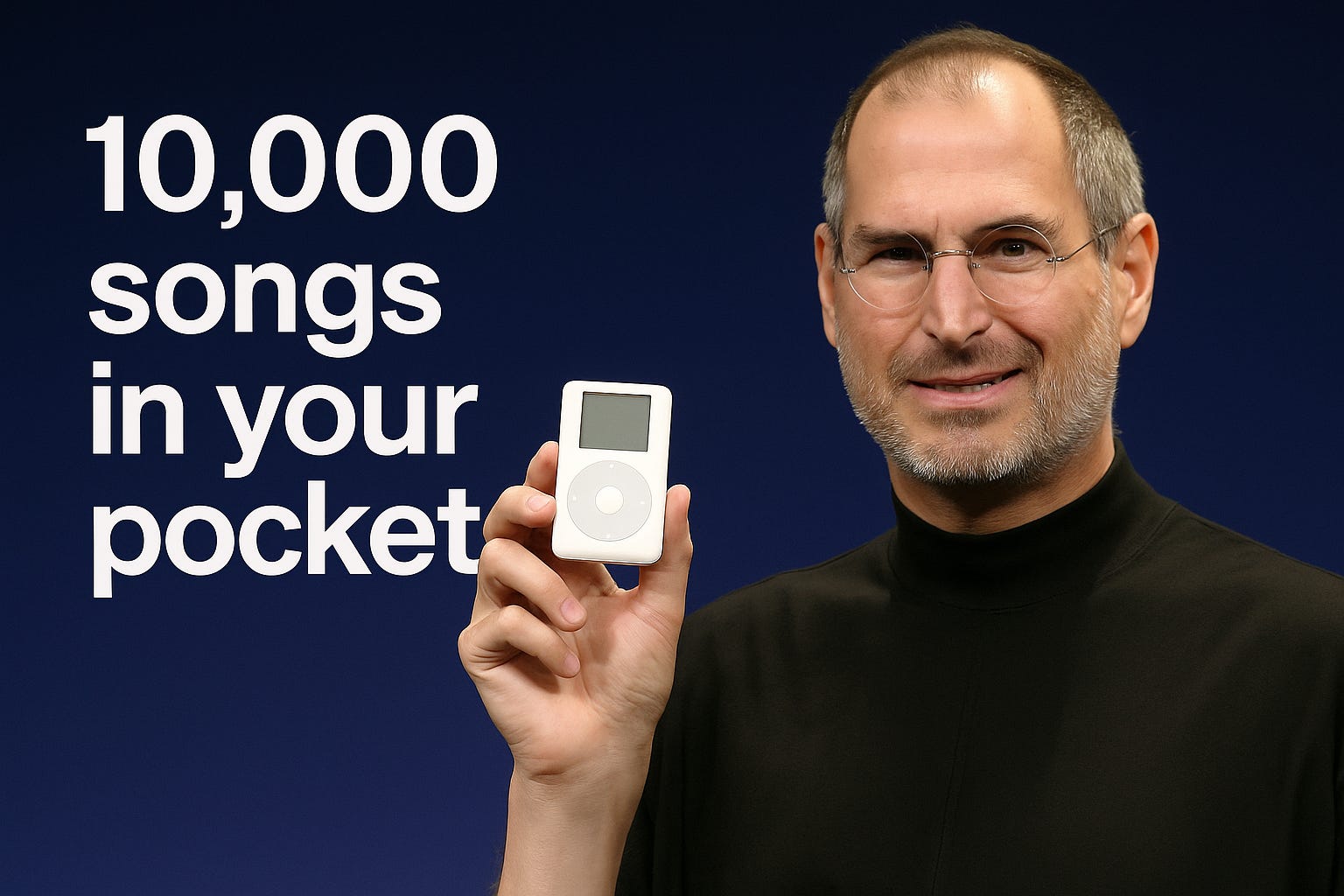
Apple did the same thing when Steve Jobs introduced the first iPod. He didn’t say “5GB storage capacity.” He said, “10,000 songs in your pocket.”
That single line turned a technical specification into a life experience. It wasn’t about the hardware—it was about freedom, joy, and simplicity.
That’s the genius of great communication. It doesn’t sell what a thing is. It sells what it means.
David Ogilvy, the father of modern advertising, once said, “The consumer isn’t a moron, she’s your wife.” His point was simple: people don’t buy features; they buy better versions of themselves.
Now think about how most technical experts describe their work.
We often lead with what we built:
“I developed a distributed system that scales to 10 million requests per second.”
That sounds impressive—especially to peers—but most listeners tune out after the first clause. It’s too abstract, too removed from what they value.
What if instead you said:
“I built the system that lets millions of people stream videos without buffering, even during peak hours.”
Same work. Different framing.
The second statement tells a story. It makes your audience feel something.
This is what marketers call WIIFY — What’s In It For You.
Every audience you face—executives, recruiters, customers, or peers—is quietly asking that question. They don’t just want to know what you did. They want to know what it did for them.
Claude Hopkins, an early legend in advertising, said it bluntly: “People don’t buy from clowns. They buy results.” The best communicators translate their technical brilliance into human value.
And there’s a deeper layer to this idea—what old-school ad writers called “the benefit of the benefit.”
For example:
Feature: “We reduced latency by 40%.”
Benefit: “That helped teams analyze data faster.”
Benefit of the benefit: “Those faster insights led to better recommendations and higher customer retention.”
Each step moves from the technical to the emotional, from what you did to why it mattered.
I once heard a story from a tech company’s internal demo day. Two engineers presented their projects.
The first spent 15 minutes explaining architecture, APIs, and design choices.
The second started with:
“Last quarter, two million users dropped off mid-purchase. Here’s how we fixed it.”
Both worked on the same problem. Only one kept the audience leaning forward. Guess who got the promotion?
That’s not manipulation—it’s clarity.
And clarity is leadership.
Leo Burnett, another advertising legend, said, “Make it simple. Make it memorable. Make it inviting to look at. Make it fun to read.”
His advice, written for ad copy, applies perfectly to technical communication in today’s world of short attention spans and endless Slack threads.
When you communicate with simplicity and purpose, you don’t just get heard—you get remembered.
Here are five practical ways to bring this mindset into your everyday work:
❶ Lead with the user.
Start with who you helped and what changed for them. That immediately grounds your story in relevance.
❷ Translate complexity.
Strip away jargon. Instead of “parallelized data ingestion,” say “it processes data from multiple sources at once, so results appear faster.”
❸ Quantify the impact.
Attach numbers, percentages, or time saved. “Reduced downtime by 20%” paints a picture that “improved reliability” never could.
❹ Anchor with stories.
Facts tell. Stories sell. Even a small narrative—like a customer who saved hours of manual work—makes your work human.
❺ Always answer ‘So what?’
Never end on what you built. End with why it matters. For the user. For the business. For the world.
Because here’s the truth: no one remembers your stack. They remember your story.
Bill Bernbach once said, “The most powerful element in advertising is the truth.”
That applies to your career, too. Speak the truth about the impact of your work.
Not what it does, but what it does for others.
So the next time you describe your project, resist the temptation to start with the specs. Start with the story.
Because the world doesn’t need another technical explanation.
It needs someone who can make people care.