

If you really want to understand a leader, don’t just listen to what they say—listen to how they say it.
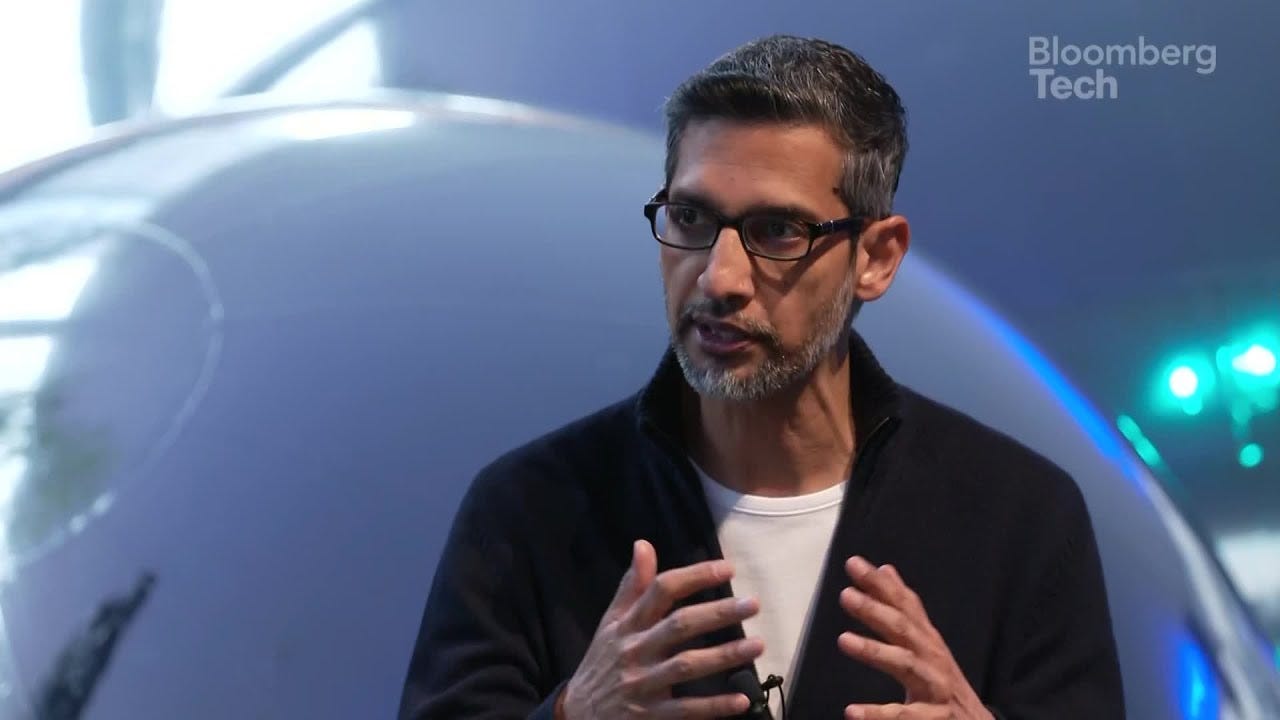
That was my experience recently when I watched a fireside chat with Sundar Pichai, CEO of Google and Alphabet, in conversation with Bloomberg’s Emily Chang at the 2025 Bloomberg Tech Summit in San Francisco.
The conversation hit all the expected topics—AI, competitiveness, the future of search, and regulation. But what struck me most wasn’t the content. It was the cadence.
As a long-time Toastmaster, I pay attention to moments most people overlook: hesitations, transitions, and fillers.
And Sundar has three reliable companions:
“Look…”
“I think…”
“I mean…”
Once I noticed them, they became a rhythm—almost like parentheses around his thinking. They weren’t random. They were part of his cognitive process, tiny verbal exhale valves as he carefully assembled ideas before speaking.
That’s when it hit me:
Fillers are not a flaw of communication—they’re a window into it.
The philosopher Epictetus once said,
“First learn the meaning of what you say, and then speak.”
Sundar’s fillers show the learning happening in real time.
And that made me reflect on something more profound:
Why do we use fillers at all?
Why We Use Fillers (The Real Psychology Behind Them)
Even the most polished leaders use fillers. Presidents. Authors. Founders. Toastmasters.
And yes—CEOs of trillion-dollar companies.
Here’s the psychology behind why:
1. We need micro time to think.
Speech moves fast. Thought moves more slowly.
A filler is just a bookmark while the brain searches for the next idea.
Cognitive scientists call this the planning buffer—your brain stalling for a split second to organize thoughts without losing the thread of the conversation.
2. Silence feels socially “expensive.”
Most of us were not raised to sit comfortably in silence.
In conversation, silence can feel like a mistake, a loss of control, or an opening for someone else to jump in.
But as Lao Tzu famously put it:
“Silence is a source of great strength.”
Ironically, when used intentionally, it makes you sound more confident—not less.
3. Fillers soften certainty.
Fillers can make us sound more collaborative, less forceful.
“I think” reduces harshness.
“I mean” signals clarification.
“Look” prepares people for a shift.
Fillers are social lubricants. They make communication feel more human.
4. It’s pure habit.
Our fillers evolve with age—almost like linguistic fashion.
Your twenties: “like.”
Your thirties: “You know.”
Your forties onward: “right?”
These habits tell the story of how you think.
A Small Story About Fillers (And What They Reveal)
A few weeks ago, I was delivering a presentation. I remember starting a key point with my usual filler of the season: “Essentially…”
I didn’t even realize it until a colleague approached me afterward and said:
“Every time you said ‘essentially,’ your body leaned forward—like you were warming up your brain.”
It was a simple observation. But it was a powerful mirror.
My filler wasn’t just a word. It was a signal—telling me where I was still assembling thoughts instead of delivering them cleanly.
And that’s when I realized something important:
👉 Fillers don’t reveal poor speaking. They reveal active thinking.
👉 When used intentionally, they can even enhance authenticity.
But what if you want to reduce them? What if they’re distracting or excessive?
That leads to the simplest (and hardest) technique of all.
How to Avoid Fillers Without Sounding Like a Robot
There’s only one reliable strategy:
Replace fillers with a breath.
Not a dramatic one.
Just a small inhale. A micro-pause. A beat.
Pause → Think → Speak.
This simple moment gives you:
Clarity: Your following sentence lands clean.
Authority: Pauses make you sound composed.
Control: You’re choosing your words, not chasing them.
Most people fear silence.
The best communicators use it.
As Eric Schmidt once said,
“Speak with intention. Silence is not the enemy of intention.”
The pause is not space.
It’s thinking space.
And it is the most underrated communication tool we have.
Fillers Change With the Seasons (And That’s a Good Thing)
We all use fillers knowingly.
And our fillers change as our thinking evolves.
Right now, mine is “Essentially.”
A year ago, it was “So…”
Before that, “Here’s the thing…”
These shifts show how our minds reorganize themselves as we grow.
Your filler is a mirror.
Instead of eliminating it, start by noticing it. Awareness is always the first step to mastery.
Two Reflection Questions
What filler word or phrase do you tend to lean on today—and what might it reveal about your thinking style?
Where in your communication could a deliberate pause replace a filler and create more clarity, confidence, or presence?
Fillers are human.
Pauses are powerful.
And excellent communication lives in the dance between the two.